Liveable Cities of the Future Week: Imagining Better Urban Futures
Liveable Cities of the Future Week: Imagining Better Urban Futures
At UWC Robert Bosch College, learning sometimes means stepping beyond the classroom entirely. During our annual Liveable Cities of the Future Week, 100 first-year students put their regular lessons on hold for an intensive, hands-on exploration of one central question: How can we design cities that truly work for both people and the planet?
For one week, the campus transforms into a hub of creativity, collaboration, and real-world problem solving. Students are divided into 16 teams and each assigned a lesser-known global city—places many had never encountered before. This deliberate choice pushes students to think beyond familiar contexts and engage with diverse urban realities around the world.
Learning Beyond the Classroom
The week begins with three days of workshops and excursions drawn from an impressive programme of 47 different offerings. These sessions introduce students to a wide range of perspectives on urban life—spanning sustainability, social justice, design, and governance.
Workshops encouraged students to challenge assumptions and explore innovative ideas. In **Doughnut Economics**, students questioned traditional growth-focused models and examined how cities can thrive within planetary boundaries. In Green Buildings & Materials, they investigated how construction choices—from concrete to bamboo—shape both climate impact and human wellbeing. Meanwhile, Hands-on Solar gave students practical insight into renewable energy technologies and their role in powering future cities.
Social dimensions of urban life were equally central. In Planning Cities with Gender Equality in Mind, students explored how urban design has historically excluded certain groups—and how more inclusive planning can reshape cities. The Governance – Power in the City workshop invited participants to design their own models of city governance, while Grounded Futures examined how nature and wellbeing can be integrated into urban environments.
Creative and cultural perspectives also played a role. A highlight of the week was a special art workshop led by Nelson Makamo, offering students a unique opportunity to connect artistic expression with urban storytelling.
Freiburg as a Living Laboratory
Afternoons were dedicated to excursions, using Freiburg and its surroundings as a real-world case study for sustainable urban development.
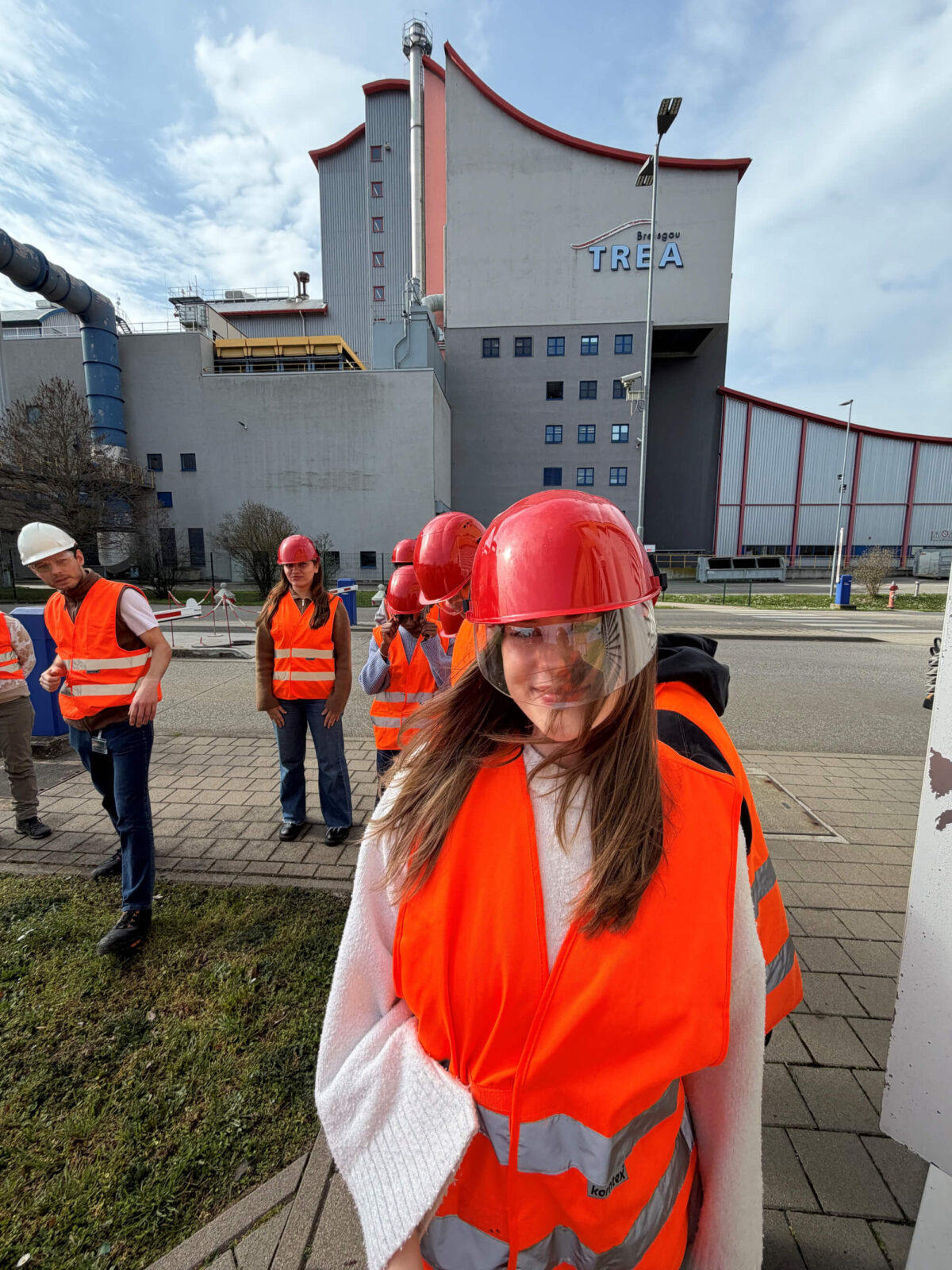
Students explored renewable energy systems firsthand, from visiting a biogas digester that transforms food waste into energy, to touring a hydroelectric power station on campus. Others travelled to the Fraunhofer Institute for Solar Energy Systems to learn about cutting-edge hydrogen technology.
Mobility and urban design came to life through activities such as bike tours examining Freiburg’s cycling infrastructure, a city-centre mobility rally, and a visit to the renowned Vauban district—widely seen as a model for sustainable neighbourhoods.
Students also explored the social and environmental fabric of cities through excursions on urban gardening, playground design, and even a guided walk through the city forest to understand the role of green spaces in urban resilience.
From Ideas to Visions
After three days of exploration, students spent a full day synthesising their learning. Each team developed a vision for what their assigned city could look like in the year 2050—combining environmental sustainability, social inclusivity, and economic viability.
These visions were brought to life through creative formats, including videos, physical models, and interactive presentations. The week concluded with a showcase where students presented their ideas to peers, followed by a light-hearted competition (with pizza as a well-earned reward for the winners!).
Student Voices
Students consistently describe the week as one of the most meaningful learning experiences of their first year. One participant reflected:
“Overall, the week was interesting and well organised. I liked the mix of workshops, data collection and group work. Meeting the BBUG guests was a good experience because we could hear different perspectives.”
Others highlighted the value of stepping outside traditional academic structures:
“It was refreshing to learn in such a practical way—actually seeing how cities work and thinking about real solutions made everything feel more relevant.”
“Working in a team on a city none of us knew pushed us to be creative and open-minded. It showed me how complex, but also how exciting, urban planning can be.”
A Different Kind of Learning
“Liveable Cities of the Future Week” embodies the spirit of experiential education at UWC Robert Bosch College. By combining interdisciplinary learning, real-world engagement, and creative expression, the programme offers students a powerful alternative to classroom-based study.
More importantly, it equips them with the tools—and the mindset—to imagine and shape a more liveable, sustainable future.