Humans of RBC: “Positive change is driven by education.”
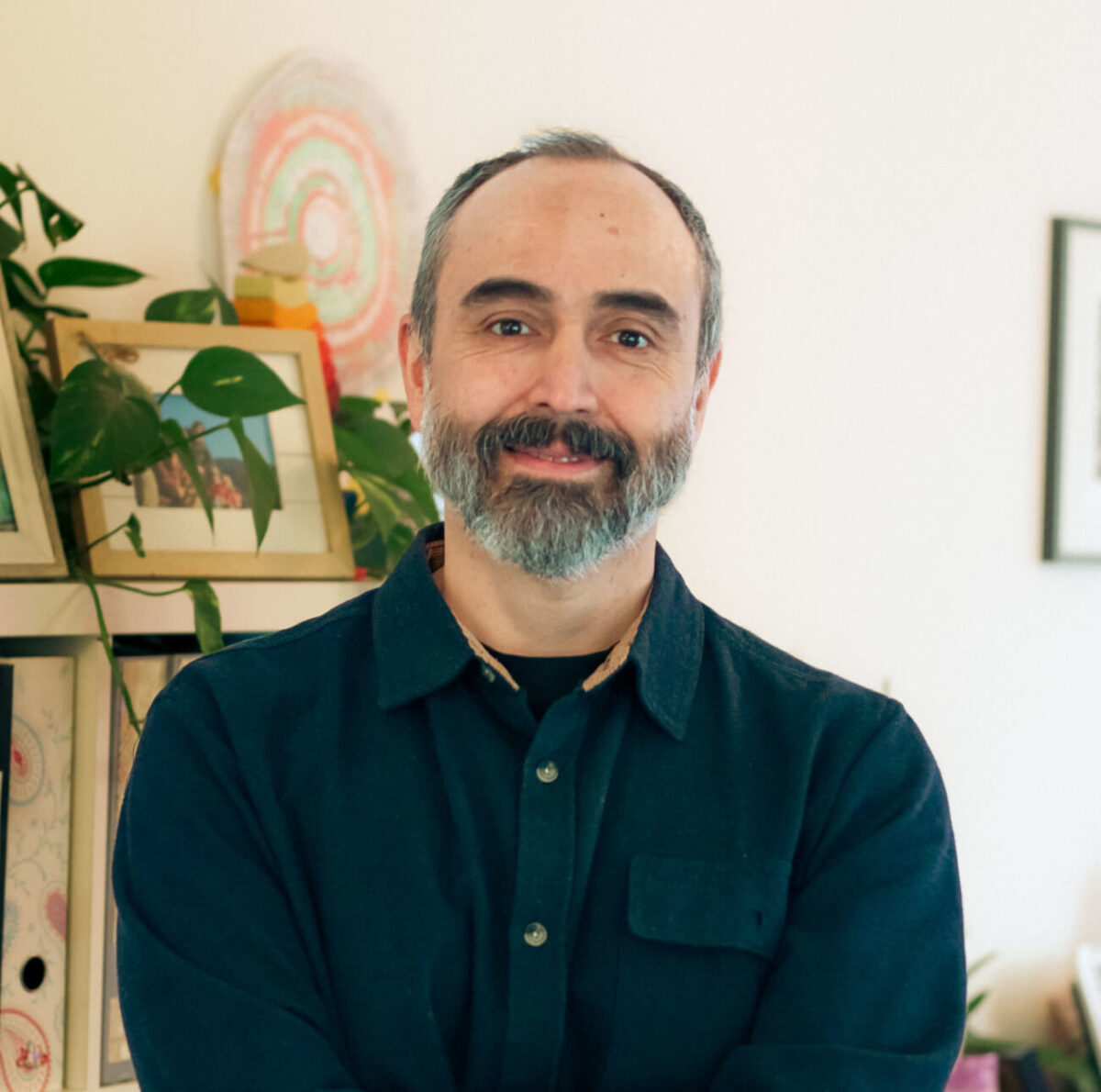
An interview by our student Clara Christ with Rodney Olguin, math teacher and house tutor at RBC
Can you please introduce yourself?
My name is Rodney, and I am 46 years old. I was born and raised in Bolivia, and I began my journey with UWC when I moved to Costa Rica to start teaching. I later worked at UWC Mostar in Bosnia and Herzegovina, where I lived for seven years and started my family. This July, I will complete my fifth year at UWC RBC, where I work as a Mathematics teacher and House Tutor.
Now, can you please introduce yourself without mentioning your name, age, role or country?
Okay! I like to refer to myself as a passionate educator. I truly love what I do – teaching and having the opportunity to make a difference.
I also consider myself a pseudo-musician. Some years ago, my friends and I celebrated the twentieth anniversary of our band back home! However, I was never exposed to formal music education, so I see myself more as an aficionado.
I’m an engineer by training; I studied engineering at university. While I mainly teach mathematics here, my engineering side shows up in everyday situations – for example, in the way I make my coffee. I enjoy paying attention to details and understanding how machines work. I also do bike repair as part of my CAS, and I like getting my hands dirty when working on my motorcycles. Oh, recently I’ve ventured into a new world: I started a small marine life ecosystem – a so-called nano tank.
I am very curious and enjoy learning about a wide range of topics, often by listening to podcasts. My favorite is a science podcast, but I am also interested in lifestyle, physical and mental wellness, management, leadership and … motorcycles. Love motorcycles!
What brought you to RBC and what does being part of this community mean to you now?
With the years I’ve spent in the UWC movement, it became clear to me that, although RBC is a young college, it is a very stable and solid one. I remember going to UWC Maastricht with Rita for a workshop. At lunchtime, we happened to sit near Laurence, and we had a very nice conversation. I had the chance to hear about his views and the way he ran the school, which left a very positive impression on me.
It was also a family decision. Over the years, Rita and I have learned that identity is extremely important for young people, and we wanted our children to develop one that reflects who we are. Rita is Austrian and she speaks German; I am from Bolivia and speak Spanish. Our family languages are German and Spanish, so we wanted to move to a country where our kids could use at least one of them. We also wanted to stay within the UWC movement, so when an opportunity arose, we gave it a shot and were very fortunate to be invited to join RBC.
For us, this means that we consider ourselves a UWC family, and we are very happy to be part of the RBC community.
You’re a mathematics teacher at RBC, and I think a phrase that you probably hear a lot is “Oh, but math doesn’t matter.” – Why do you think mathematics does matter?
I understand why some people think that math doesn’t matter or that it is an exclusive field. However, mathematics is probably our only way of trying to understand the universe we live in. Scientific breakthroughs have always been grounded in mathematics. When I was teaching physics, I used to think that everything was about physics.
But the more you learn, the more you realize that even the most prominent physicists depended heavily on mathematics—they needed it to make progress. And if physics relies on mathematics, then in a way, everything does.
What I try to do is convey this idea to my students by showing them how mathematics appears in our everyday lives.
You‘re not only a passionate teacher but also a house tutor and live on campus with your family. How do you combine family and campus life?
For us, it makes a big difference in a positive way. Contrary to what people might think, it’s not uncomfortable to live on campus. I can honestly say that once we‘re home and it’s time to get the children to bed, we close windows and doors, and it feels like we could be anywhere in Freiburg – our life would be the same. In fact, we enjoy having students around. We’ve lived in other places, and no matter where you live, you’re always going to have neighbors – sometimes not the nicest ones. Here, I get to be surrounded by young people, to greet them, and to witness both their good days and the bad days. That’s simply part of living together. Our kids really love living on campus, but they also have lives outside the bubble. They go to school, have their friends, we live a very normal, happy life.
That’s wonderful! Us students, we really couldn’t imagine campus without your family! Now, what’s your favourite place on campus and why?
I can think of two places. One of them is the bike repair workshop – that’s where my engineering side thrives! Seeing the people who join that service learn and gain skills is very rewarding and having the tools there to support that is priceless! My other favourite place is the staff bike parking lot, because that is where my motorcycles are. I love spending time there personalizing them and chatting with colleagues who pass by. It’s a place where I have many conversations! Whenever the sun is out and I get a chance, it’s also a place where I can disconnect from the usual busy routine.
What gives you hope or keeps you motivated to work towards a more peaceful and sustainable future?
One word that comes to my mind – one that has had a strong impact on my life – is “change”. I like to think of change as something inherently uncomfortable. It often makes individuals and societies uneasy. However, I’ve found that once you overcome that discomfort, change tends to be for the better. I strongly believe that positive change is driven by education. As individuals, the choices we make in our lives can have an impact, even on a larger scale. I often say that our life choices are political choices, and all our decisions would be better, if you placed the word “educated” in front of them. If we are able to make educated life choices, and educated everyday decisions, we can make significant change.