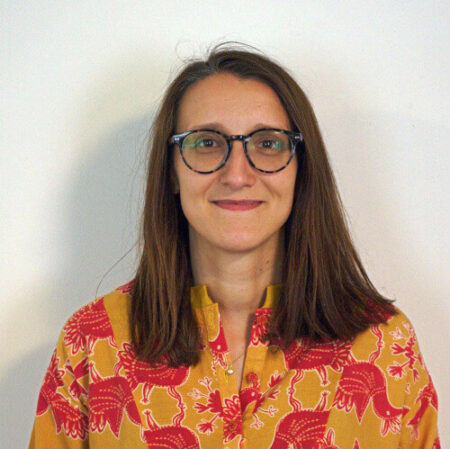
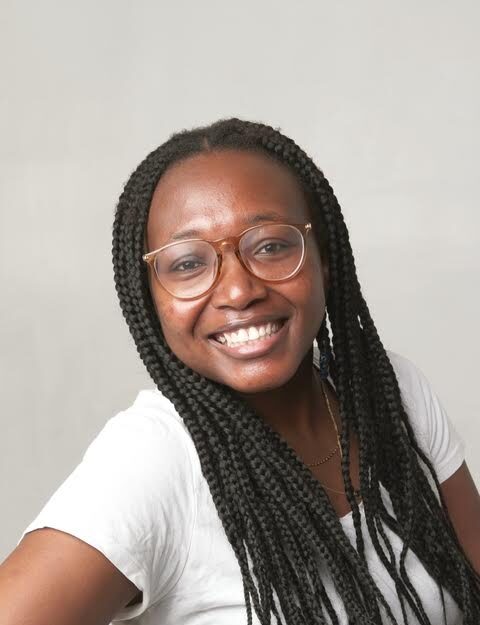
Alumni Spotlight: Fainess (Class of 2017)
Representing Herself: Fainess’s UWC RBC Journey
Fainess grew up in Tanzania knowing about UWC before she fully understood it. At her secondary school, a handful of students would leave after Grade 10 (Form 4) for colleges abroad, and something about them always stood out. “You could tell that these were UWC kids,” she says. “The things they talked about, what they were passionate about. They felt like social justice warriors.”
She asked them about it, and when she finished school in 2014, she applied. She was matched with UWC Robert Bosch College, at the time so new that she would be only part of its second cohort. The journey to Freiburg began with getting lost in Frankfurt airport. Then came the RBC hill, the brightness of a summer evening, something she had never experienced before, and the cheering outside as the bus pulled up. The first person to greet her was a second-year student from Kenya. “I said I was from Tanzania, and she just started speaking to me in Swahili. I thought: this is going to be fun.”
Before she had even arrived, her parents sat her down with a quiet piece of advice: this was an opportunity to represent Tanzania. They meant it lovingly, and Fainess took it seriously. In her first semester she gave everything to that role: sharing, representing, explaining. It was only during the December break, when she stepped back and breathed, that she realised something had to change. “I didn’t feel like I had to represent a country. I could just represent myself.”
She came back in January with that shift settled in her, and everything followed from it. Conversations that had been about countries became conversations about people. Her friendships deepened. She felt more present. “Instead of it being a show-and-tell experience, it became about self,” she says. “That was when learning became the centre of everything.”
Some of her clearest memories are the simplest ones: sitting in the living room of her house late at night, talking to whoever came by. Special Focus Days. The Vagina Monologues. Long conversations in the garden. Her roommate from Thailand, with whom she still speaks today, and with whom the discussions gradually shifted from “what is your country like” to “what do we want to do next.” The IB gave her practical tools she was grateful for later, the writing, the Extended Essays, the IAs, but it was the texture of daily life at RBC that shaped her most.
After graduating in 2017, Fainess went to the University of British Columbia in Vancouver to study biochemistry, then stayed in Canada for eight years, working in public health research, steadily building towards the career she had always had in mind. Women’s health. It was never a detour or a discovery; it was always where she was headed. “I grew up surrounded by women. Everything in my life was shaped by women. I just want to do something that gives back to them.”
When her work permit expired at the end of last year, she came home to Tanzania. She had been away for a decade, and suddenly she was home with no fixed plan. Job applications moved slowly. But somewhere around February, she made a decision: to actually be there — travelling, resting, consulting for local researchers, helping an NGO with fieldwork. “I realised I would probably never have a break this long again,” she says. “So I decided to use it.” In the meantime, she has been giving back to the movement that shaped her. She works with Tanzania’s UWC National Committee to support the selection process and assists with orientation for newly accepted students, sitting with young people at the same threshold she once stood at. She is also involved with the UWC school in Tanzania, contributing to a community growing the mission on her own soil.
Fainess hopes to start a master’s degree in the UK by August, with a PhD and a career in women’s health research beyond that. She speaks about it not with ambition exactly, but with the calm certainty of someone who has known for a long time where she is going. “I don’t see myself doing anything else,” she says. “There’s nothing else I could do.”
While RBC didn’t give her that purpose, it gave her the space to stop performing and start listening to it.