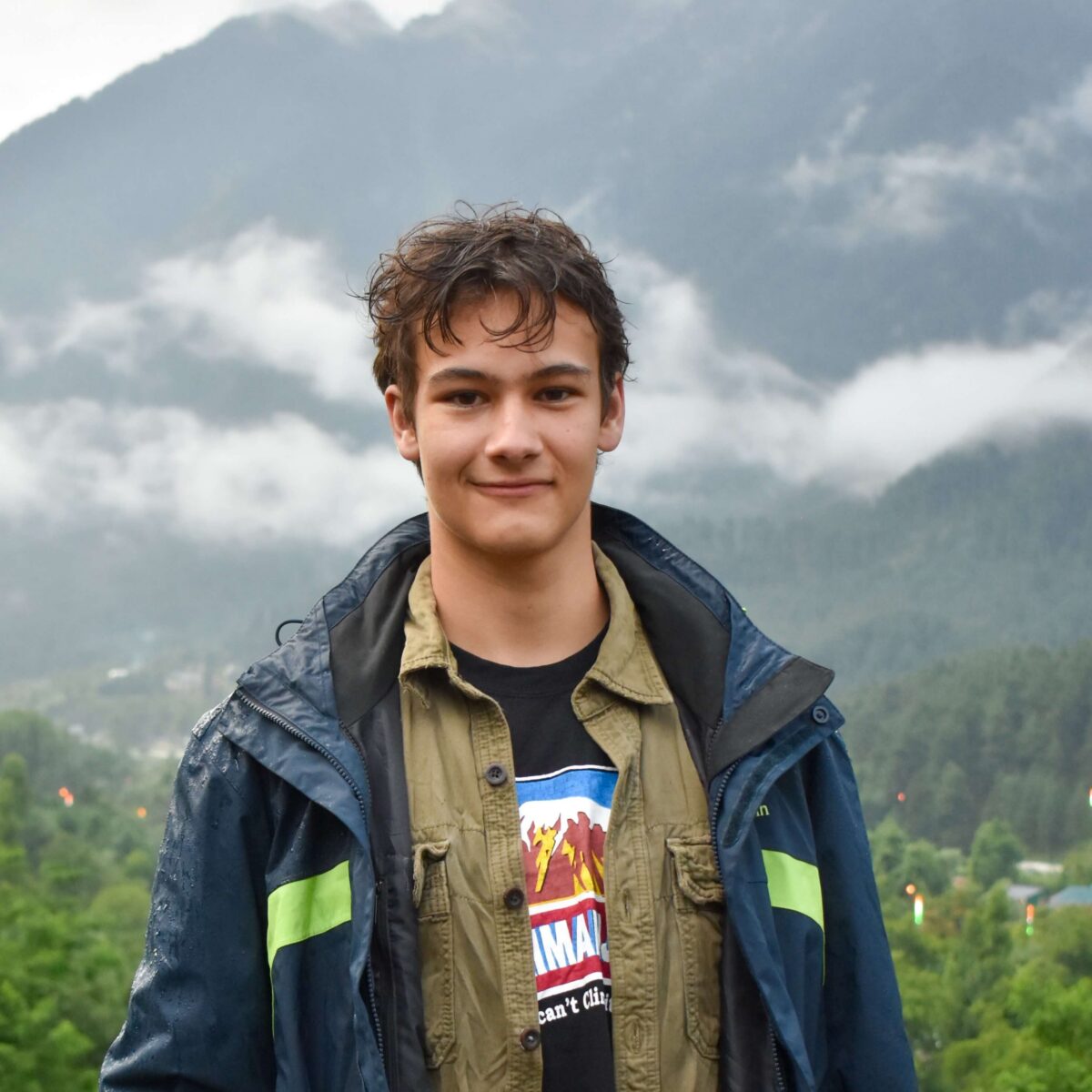
Alumni Spotlight: Dylan (Class of 2020)
From a farm in Tanzania to the frontiers of fusion energy
Dylan did not go looking for UWC. UWC found him through a family friendship in Tanzania, where he grew up on a farm far from any city and attended an international school that, in his own words, offered little real diversity of thought or background. Two close family friends had both attended UWC themselves, one among the early cohorts at Adriatic, the other at Atlantic, and when their children reached the age to apply, they recognised something in Dylan that made them suggest he do the same. He read up on the movement and knew almost immediately that it would suit him. The openness, the sheer scale of intercultural exchange on offer, and a college built around genuine sustainability and care for the world spoke directly to who he already was.
Arriving at RBC meant trading a rural farm in Tanzania for a town in the heart of the Black Forest, and the adjustment, he admits, took real getting used to. He was not overwhelmed in a bad way, just newly aware of how much there was to learn while finding his footing academically among a cohort of equally driven peers. Having always excelled at school before, he found himself placed on the boundary between higher and standard level maths, and chose the harder path anyway, a decision that demanded real humility and adjustment in those first months. What carried him through were the people: his roommates, his housemates, weekend outings with his PT group, and later, project weeks that became some of his most treasured RBC memories. One took him cycling with his teacher Angus and a small group of four through Germany and Austria. Another, which Dylan led himself, brought a group to Geneva to visit CERN and meet researchers there, a week he remembers fondly for the closeness it built among a small group of self-described fun, slightly nerdy companions. Physics, taught by Richard, became his clear favourite subject and Richard himself a defining mentor, so much so that Dylan still calls the Greek letter omega by Richard’s own private nickname for it, a wobble-u, whenever he writes it down. Then came the strangest ending imaginable: with no exams to sit and no flights home to Tanzania, Dylan stayed on campus deep into a COVID-altered final term, gardening and helping build one of the ponds that still dot the grounds today, and experiencing, as he puts it, UWC without the school and without the academics, a version of the place stripped down to just the people and the land, which he now remembers as an unexpectedly precious time.
The path onward was not straightforward either. Visa delays pushed back his start at Middlebury College by a semester, so Dylan spent eight months cycling and taking trains across Germany as a travelling salesman for a small, sustainably run postcard company owned by his host family, a job that let him see far more of the country than most RBC students ever do. When he finally reached Middlebury, he found a community thick with fellow UWC graduates and a setting that felt strikingly familiar: a small town surrounded by forest, with sustainability woven into daily life, much like RBC itself. He threw himself into the Sustainable Environmental Council, working alongside students, professors and university administrators, and helped plan a large solar farm that now supplies roughly a third of Middlebury’s electricity. A dual degree programme, funded in large part by a Davis Scholarship, then carried him to Columbia University for a Bachelor of Science, and he graduated from both institutions before beginning a PhD, now in its second year, in plasma physics and fusion. His research sits at the heart of one of science’s great open questions: how to recreate, safely and sustainably, the process that powers the sun, producing abundant, nearly waste-free energy here on Earth. The science has already cleared one major hurdle, producing more energy from a reaction than is put into it, but sustaining that reaction long enough to draw usable power from it remains the challenge his lab and others are racing to solve, with the first electricity from private fusion ventures hoped for within the 2030s.
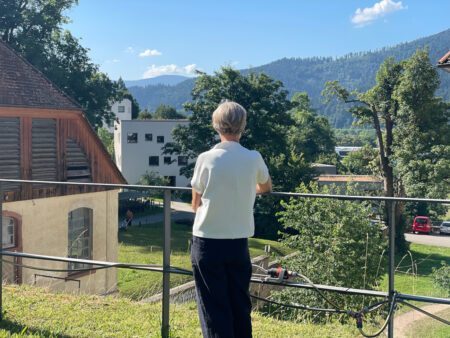
Ask Dylan what UWC actually gave him, and it is not, in the end, the physics. It is the openness. Growing up in what he calls a small bubble in Tanzania, he credits his two years at RBC with teaching him to engage genuinely with people from every conceivable background, a skill he says has carried him further than any equation. What he misses most is disarmingly simple: the view from his room in House One, looking out at the Karthaus and the mountain behind it, and the particular smell of walking through the garden on an ordinary morning. It is a reminder, for the students walking that same path today, that a UWC education is never really a straight line. Dylan’s story is proof that curiosity, once properly awakened, tends to find its own way forward, however winding the road.