Humans of RBC: Between Biodiversity and Community
Wolfram Seitz-Schüle on Nature, Responsibility, and Life at RBC
Could you introduce yourself?
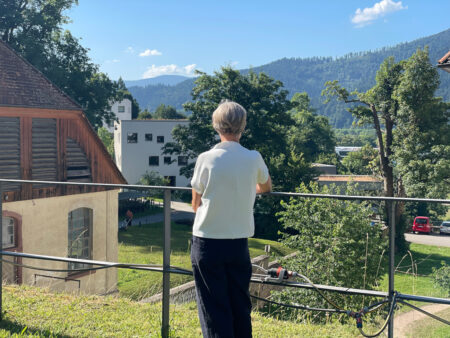
My name is Wolfram Seitz-Schüle. I’m married to Eva Maria Schüle, we have two grown-up sons, and by now, three grandchildren. At RBC, I work as the Estate Manager.
Now could you introduce yourself again—without mentioning your name, your family, or your role at RBC?
I look after the extraordinary gift of nature that this place offers us. That means I dedicate myself to nature conservation, biodiversity, and preserving the historical character of the campus.
In other words, as Estate Manager you take care of the 9.8-hectare grounds surrounding our campus. What does that involve on a day-to-day basis?
Our campus is part of a major ecological corridor stretching from the Rhine Valley into the Black Forest, which plays a particularly important role in today’s biodiversity crisis. That’s why our work doesn’t stop at the campus boundaries. We also support conservation efforts beyond our grounds—with our machinery and with our animals.
What brought you to RBC, and what does being part of this community mean to you today?
Our family has lived here for generations, so in many ways RBC came to us rather than the other way around. Eva’s grandfather and father were foresters here, and Eva and I have been caring for these grounds for almost 40 years.
Looking back, the College has been one of the greatest gifts in our lives. The monastery we are part of was an important centre of European humanism during the Middle Ages, and one of the era’s most influential scientific works was written here. RBC has brought those traditions back: a commitment to science, humanism, and peacebuilding.
What makes it truly special is that every year, 100 motivated young people arrive here, believing in the future. Together with them, we have the privilege of building a community.
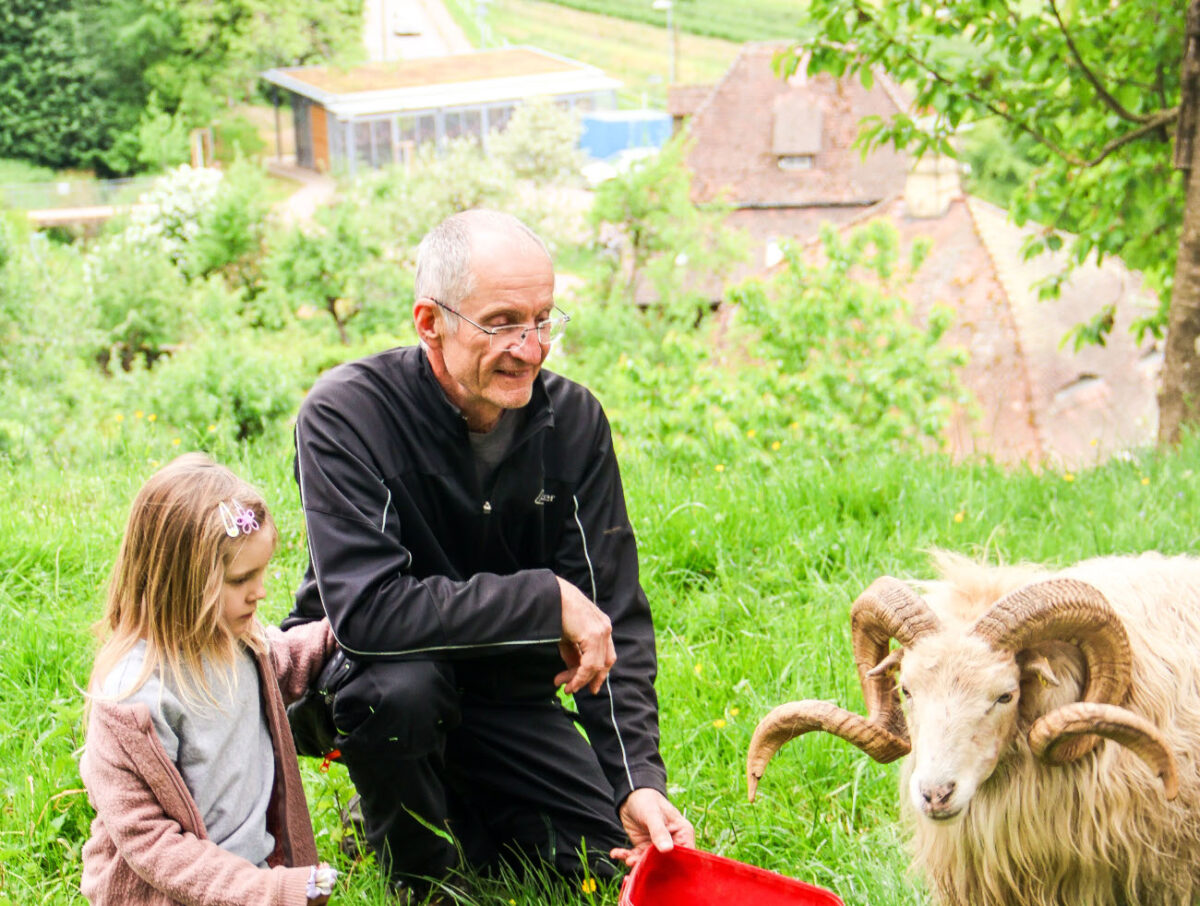
As students, we can’t imagine campus without the sheep—and when it comes to them, you’re the expert. Can you share one secret about the RBC sheep?
Well, the biggest secret with sheep is always: treats.
Clara: I actually got to see that in action earlier!
Exactly! We work with the sheep without using a sheepdog, so we have to train them a little to make working with them easier. The secret is grain—or something sweet. Of course, you have to be careful not to overdo it, because too much isn’t healthy for ruminants.
Clara: How many sheep do we have?
We have around 100 sheep, as well as two alpacas. And when we need them, we also work with cattle for grazing.
Do you have a favourite place on campus?
There are many favourite places. One of them is the little island below the old power station. We spent a lot of time there as a family, and it’s where our children — and later our grandchildren — learned to swim.
Leni (granddaughter): Yes, I used to swim there all the time!
Another favourite is the Johannesheim meadow. In spring, you can look up and see the Feldberg still covered in snow, while down here everything already feels warm and full of spring.
What do you enjoy most about your work?
I’ve always felt very connected to nature. What I love is that I can dedicate myself to my greatest passions here: contributing to society — I also volunteer in civil protection and disaster response — and working to protect biodiversity and the natural environment.
Finally, what motivates you to keep working towards a peaceful and sustainable future?
Whenever I look into the eyes of our students, it’s their vision of the future that gives me hope and motivation.
There’s a quote often attributed to Martin Luther: “Even if I knew the world would end tomorrow, I would still plant an apple tree today.”
For me, the College—and the work we do here—is that apple tree.
Interview by RBC student Clara Christ.